
Why Hip Pain Can Affect Walking and Standing: What Physiotherapy Assessment Looks For
Why Hip Pain Can Affect Walking and Standing: What Physiotherapy Assessment Looks For
Hip discomfort can make everyday activities more difficult than expected. A short walk, standing at work, getting out of a chair or climbing stairs may begin to cause aching, stiffness or reduced confidence in the affected leg.
Some people feel discomfort at the front of the hip or in the groin. Others notice symptoms along the outside of the hip, through the buttock or into the upper thigh. The hip may feel stiff when first standing, uncomfortable after prolonged activity or unable to tolerate the usual amount of walking.
Because several muscles, joints and movement patterns contribute to hip function, effective treatment should begin with an assessment rather than assumptions based only on where the discomfort is felt.
At Dynamic Physiotherapy & Sports Injury Clinic in Mississauga, physiotherapy assessment considers hip mobility, strength, balance, walking mechanics and the activities that aggravate symptoms before an individualized rehabilitation plan is recommended.
Why Is the Hip Important During Walking?
The hip helps support the body and control the position of the pelvis and leg during every step.
When walking, the muscles surrounding the hip must help stabilize the pelvis as weight transfers from one leg to the other. The hip also works with the lower back, knee, ankle and foot to move the body forward and absorb changing loads.
If hip mobility, strength or control has changed, walking may become uncomfortable or less efficient. A person may begin taking shorter steps, shifting weight away from one side or leaning the upper body to compensate.
Hip symptoms during walking may be influenced by:
- Reduced strength in the hip or buttock muscles
- Limited hip-joint mobility
- Muscle or tendon irritation
- Changes in balance or pelvic control
- A sudden increase in walking, running or exercise
- Repetitive work or recreational activities
- Previous injuries affecting the hip, knee or lower back
- Age-related joint changes
- Reduced ankle mobility or lower-body coordination
The presence of one of these factors does not automatically identify the source of the symptoms. A broader assessment is often needed to understand how the person is moving and which activities are most difficult.
Why Can Prolonged Standing Aggravate Hip Pain?
Standing may appear relatively simple, but the hips and surrounding muscles remain active to support posture and keep the pelvis stable.
When a person stands for an extended period, they may gradually shift more weight onto one leg, lock the knees or allow the pelvis to move out of a comfortable position. These habits may increase strain through the hip and surrounding tissues.
Standing discomfort may also become more noticeable when someone:
- Works on a hard surface
- Stands in one position without changing posture
- Consistently places more weight through one leg
- Has recently increased work or activity demands
- Wears footwear that does not provide appropriate comfort or support
- Has reduced hip, knee or ankle mobility
- Is experiencing weakness or fatigue in the supporting muscles
Changing position or sitting briefly may reduce the discomfort, but recurring symptoms can indicate that the hip and surrounding regions should be assessed more closely.
The Location of Hip Pain Can Provide Useful Information
Where a person feels hip discomfort may help guide an assessment, although symptom location alone does not confirm a diagnosis.
Front of the hip or groin
Discomfort in the front of the hip or groin may be associated with the hip joint, surrounding muscles or structures that help lift and rotate the leg. Symptoms may become noticeable when walking uphill, climbing stairs, rising from a low chair or bringing the knee toward the chest.
Outside of the hip
Pain or tenderness along the outside of the hip may affect walking, prolonged standing or lying on the involved side. The muscles and tendons that stabilize the pelvis during walking may require assessment.
Buttock or back of the hip
Discomfort through the buttock or back of the hip may be related to local muscles and joints, but symptoms can also be influenced by the lower back or nerve irritation.
Dynamic’s information on conditions affecting the hip and back provides additional context on how these connected regions may influence movement and symptoms.
Hip Pain May Be Connected to the Lower Back or Knee
The body does not move as a collection of completely separate parts.
The hip, pelvis and lower back work together during walking, bending and lifting. At the same time, the hip helps control the alignment and movement of the knee.
Reduced hip strength or mobility may change how the knee is loaded. Conversely, knee pain may cause a person to shorten their stride or shift weight in a way that increases demand on the hip.
Symptoms that appear to originate from the hip may sometimes be influenced by the lumbar spine. This may be considered when discomfort travels into the leg or is accompanied by numbness, tingling or changes in strength.
A physiotherapy assessment therefore looks beyond the painful area to determine whether other regions may be contributing.
What Does a Physiotherapy Assessment Examine?
An assessment generally begins with questions about when the symptoms started, where they are felt and which activities make them better or worse.
The physiotherapist may also ask about:
- Recent changes in exercise, work or walking volume
- Previous hip, back, knee or ankle injuries
- Pain during sleep or when lying on one side
- Difficulty with stairs, squatting or getting out of a chair
- How long the person can comfortably walk or stand
- Whether the hip feels stiff, weak, unstable or restricted
- The presence of numbness, tingling or symptoms extending down the leg
- Relevant medical conditions, surgeries or imaging
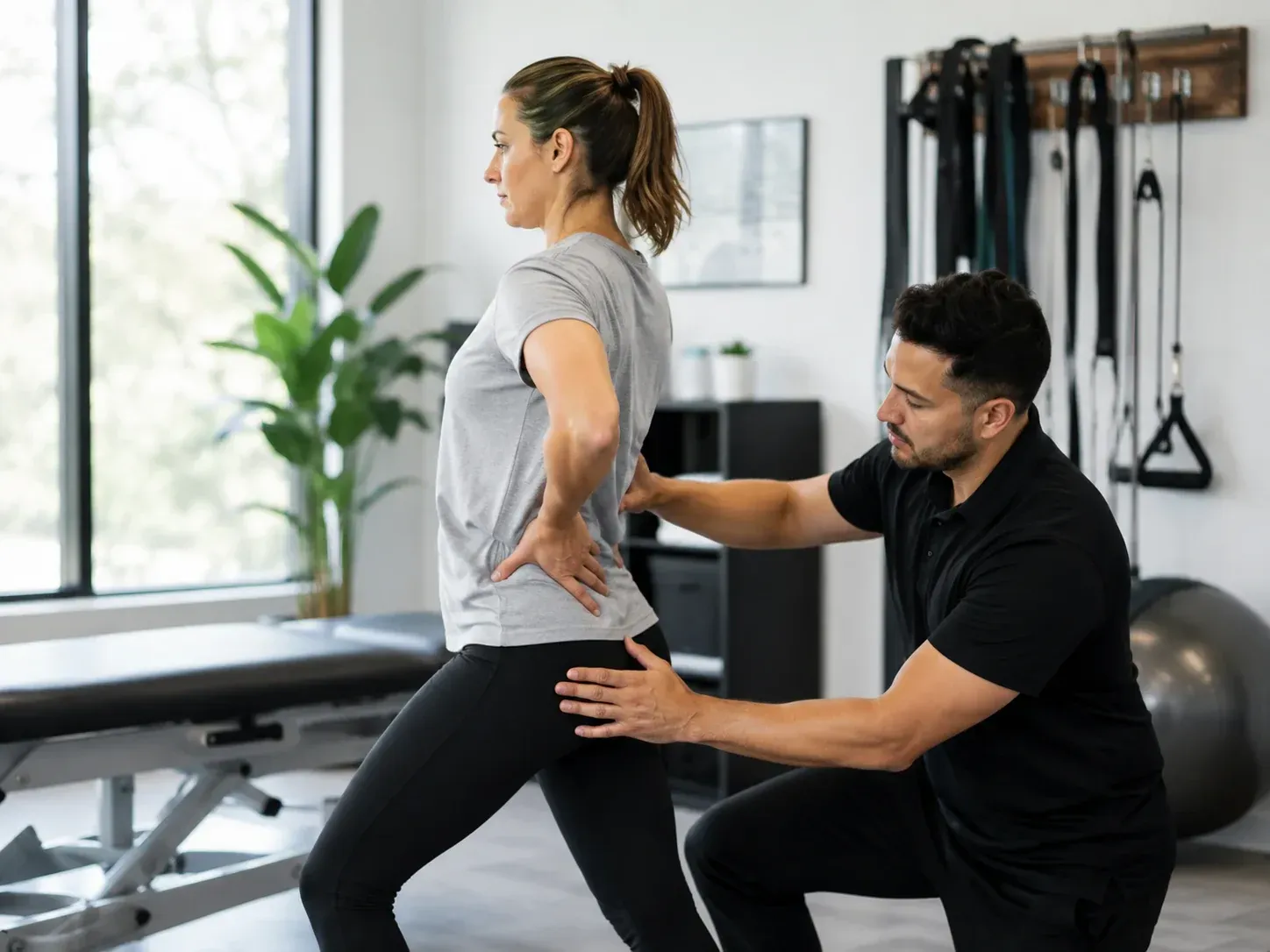
The physical portion of the assessment may examine posture, walking, balance, hip and lower-back mobility, lower-body strength and movement during functional activities.
Depending on the individual, the physiotherapist may observe movements such as:
- Walking at different speeds
- Standing on one leg
- Rising from a chair
- Squatting
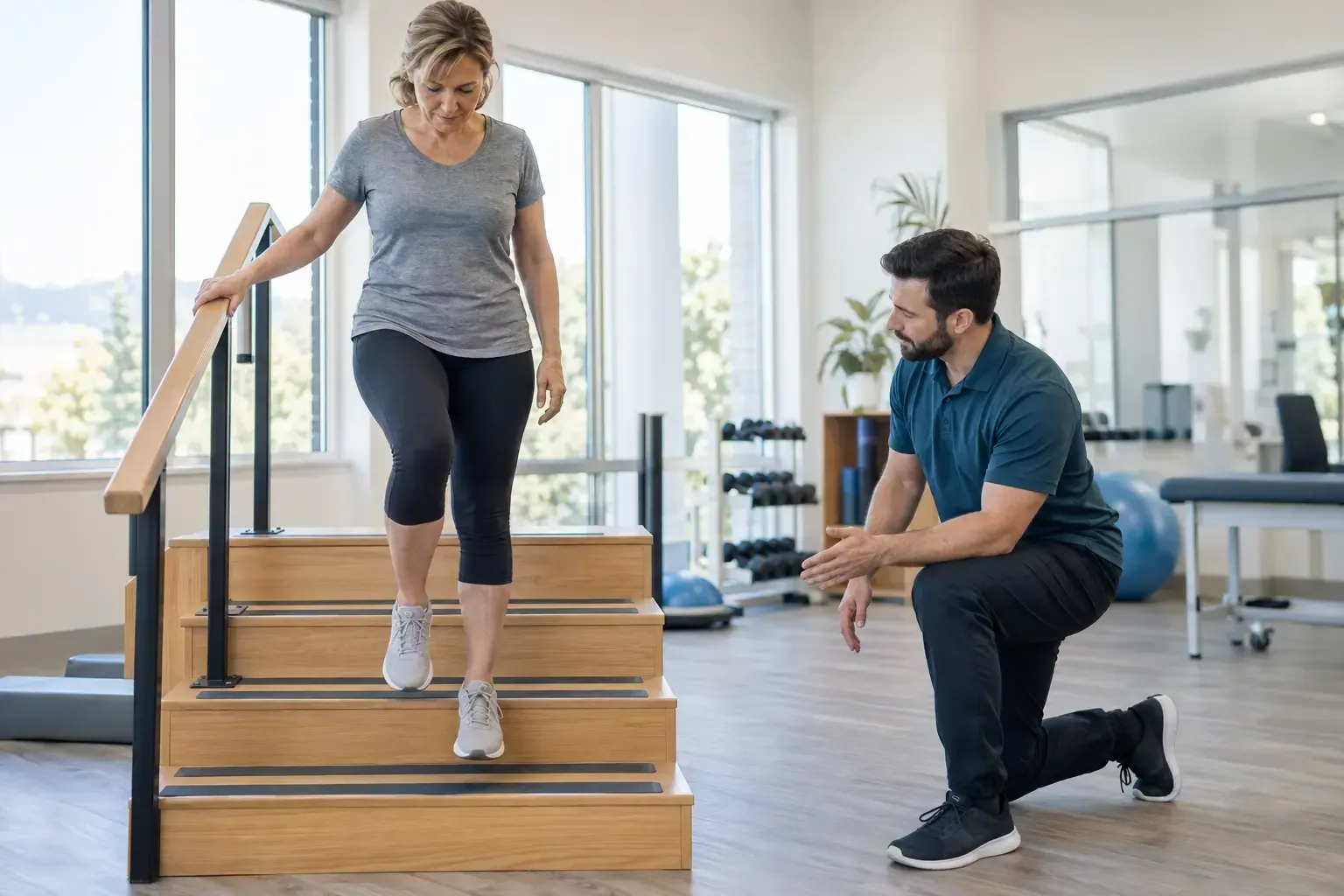
- Stepping up or down
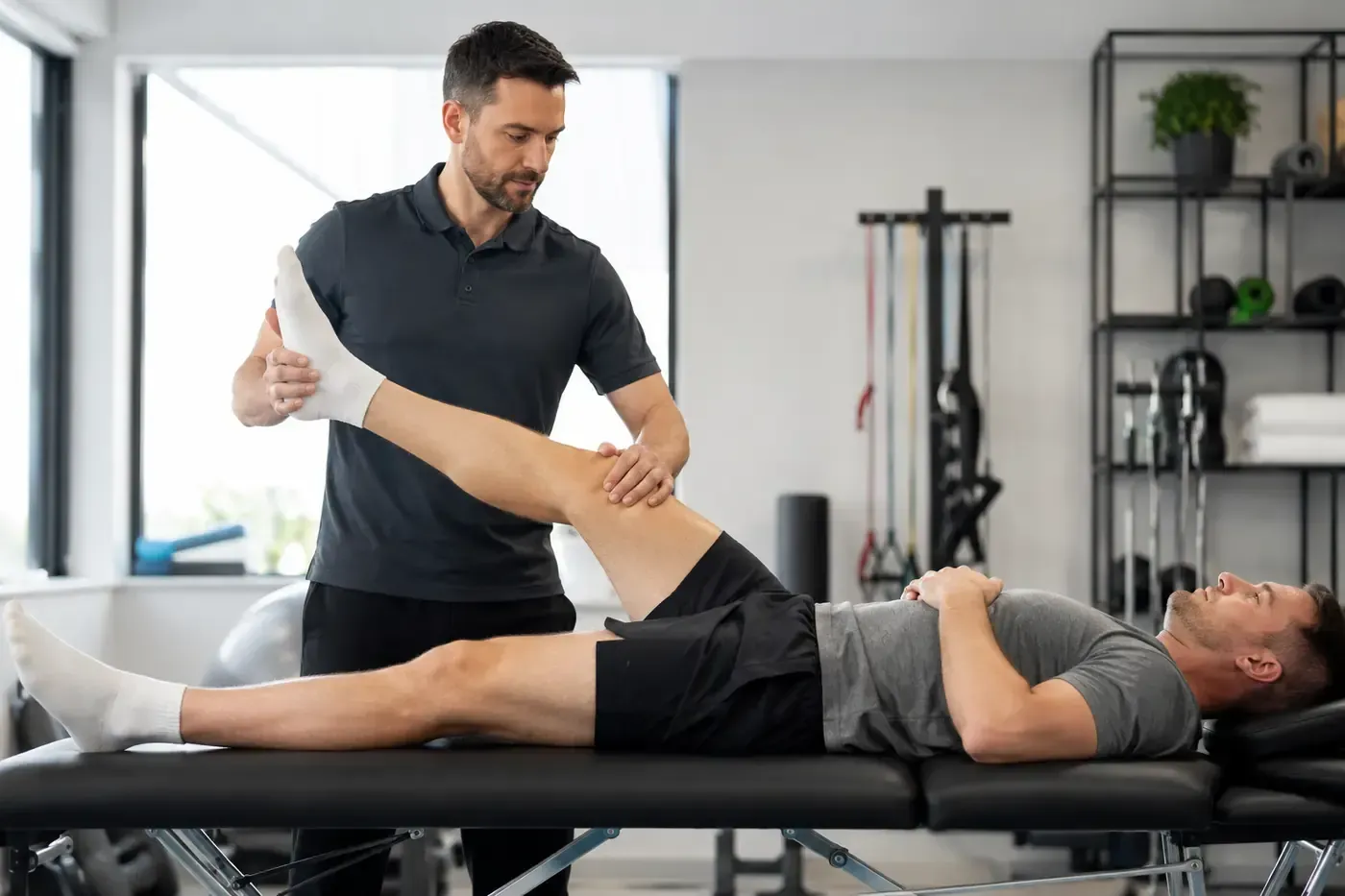
- Moving the hip in different directions
- Activating the muscles that stabilize the pelvis
The purpose is not simply to reproduce discomfort. It is to identify limitations and movement factors that may help guide an appropriate rehabilitation plan.
Learn more about Dynamic’s approach to physiotherapy assessment and treatment in Mississauga.
How May Physiotherapy Support Hip-Pain Recovery?
Treatment should reflect the assessment findings, the individual’s symptoms and the activities they need to regain.
A personalized rehabilitation plan may include several components.
Education and activity modification
Understanding which activities are aggravating the hip can help the person manage symptoms without unnecessarily avoiding all movement.
Temporary changes may involve adjusting walking distance, standing duration, exercise intensity or the frequency of demanding activities. The goal is usually to find a manageable level of activity and then gradually rebuild tolerance.
Mobility exercises
When limited movement is contributing to the problem, exercises may be used to improve mobility through the hip or nearby regions.
The appropriate exercises depend on which movements are restricted and how the symptoms respond. Aggressive stretching is not automatically suitable for every form of hip discomfort.
Progressive strengthening
Strengthening may focus on the muscles surrounding the hip, pelvis, thigh and core.
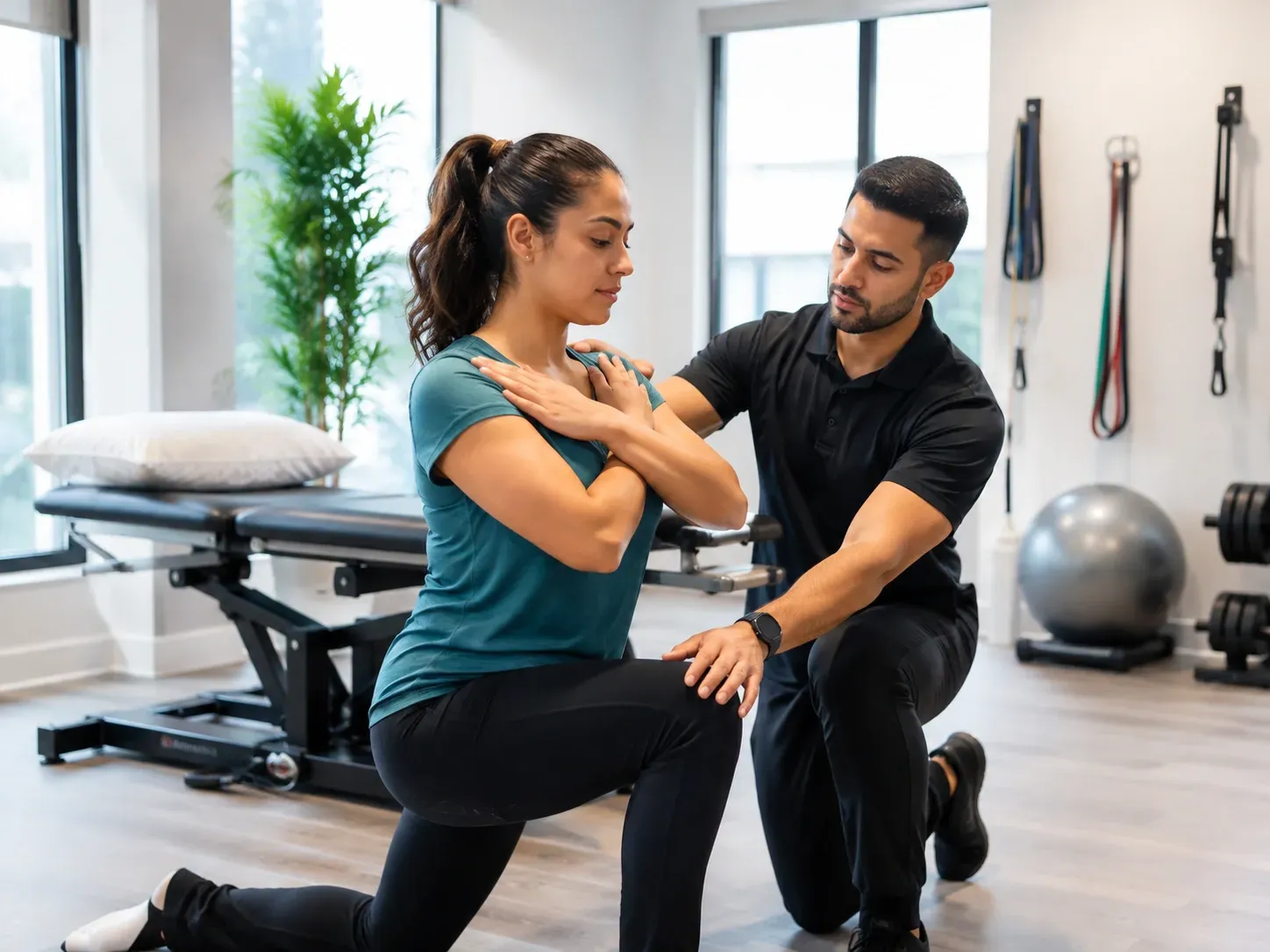
Early exercises may be performed in supported positions. As control and tolerance improve, rehabilitation may progress toward standing exercises, step movements, walking drills and activities that better represent daily demands.
Balance and movement control
Single-leg balance and controlled weight transfer are important during walking.
Exercises may help improve pelvic stability and the ability to accept weight through the affected leg without excessive compensation.
Hands-on treatment
Manual therapy may sometimes be used to address stiffness or surrounding muscle tension. It is generally most useful when combined with exercise, education and a plan for restoring function.
Gradual return to activity
The later stages of rehabilitation should reflect what the person wants or needs to do.
This may include longer walks, prolonged standing, stairs, recreational exercise, running or a structured return to sport. Dynamic also provides sports injury rehabilitation for activity-related injuries requiring progressive return-to-sport planning.
Should You Rest When Your Hip Hurts?
A short reduction in aggravating activity may be appropriate when symptoms have recently increased. However, completely avoiding movement for an extended period may contribute to additional stiffness, weakness and reduced confidence.
A more useful approach may involve adjusting:
- Walking distance
- Walking speed
- Frequency of rest breaks
- Time spent standing in one position
- Exercise intensity
- Hill or stair exposure
- Repetitive lifting or bending
- The type of footwear being used
The appropriate level of activity depends on the cause and behaviour of the symptoms. A physiotherapist can help determine how activity may be modified while rehabilitation progresses.
When Should Hip Pain Be Assessed?
Consider arranging an assessment when hip pain:
- Continues or repeatedly returns
- Interferes with walking or standing
- Limits work, exercise or recreational activity
- Causes limping or avoidance of one leg
- Makes stairs or rising from a chair difficult
- Affects sleep or makes lying on one side uncomfortable
- Is associated with reduced mobility or strength
- Began after a fall, collision or other injury
Prompt medical attention may be appropriate following significant trauma, an inability to bear weight, obvious deformity, rapidly increasing swelling, fever, unexplained illness or other concerning symptoms.
Recovery Should Be Measured by Function
Reducing discomfort is important, but rehabilitation should also address the activities that the person wants to regain.
For someone experiencing hip pain, progress may be reflected in the ability to:
- Walk farther with a more comfortable stride
- Stand longer without repeatedly shifting weight
- Rise from a chair with greater control
- Use stairs more confidently
- Sleep with less disruption
- Return to work or household activities
- Resume exercise or recreational activity
Recovery time varies according to the cause of the symptoms, how long they have been present, the person’s general health and the physical demands placed on the hip.
Begin With a Physiotherapy Assessment
If hip discomfort is affecting walking, standing, stairs, work or exercise, an assessment can help identify the factors contributing to the problem.
At Dynamic Physiotherapy & Sports Injury Clinic in Mississauga, we develop individualized rehabilitation plans based on each client’s symptoms, mobility, strength, activity requirements and recovery goals.
Contact Dynamic Physiotherapy to arrange an assessment and begin working toward more comfortable movement.
SHARE POST:
Leave a Comment:
Our Recent Post:


Contact Dynamic Physiotherapy & Sports Injury in Mississauga
For expert care and rehabilitation, contact Dynamic Physiotherapy & Sports Injury in Mississauga. Our dedicated team is ready to help you recover and achieve your health goals.