
Knee Pain When Squatting or Getting Up From a Chair: What to Notice
Knee Pain When Squatting or Getting Up From a Chair: What to Notice
Getting up from the couch, lowering yourself onto a chair or bending to pick something up should feel like ordinary parts of your day. When these movements repeatedly bring on knee pain, you may start using your arms more, avoiding lower seats or hesitating before standing.
Knee pain during these activities can have several explanations. The movement that hurts is a useful clue, but it does not identify the cause on its own.
At Dynamic Physiotherapy & Sports Injury Clinic in Mississauga, assessment helps clarify your symptoms, movement limitations and everyday goals before rehabilitation is recommended.
WHY THESE MOVEMENTS CAN BRING ON KNEE PAIN
Squatting and standing from a chair require your knees to bend and straighten while the muscles around your hips and thighs help support and move your body.
Discomfort may become more noticeable with deeper bending, repeated movements or a recent increase in activity. Some people notice pain around the kneecap; others feel discomfort along the joint line or stiffness after sitting.
Different conditions can produce overlapping symptoms. Pain during a squat does not automatically mean arthritis, damaged cartilage or a meniscus tear.
Explore Dynamic’s knee conditions and physiotherapy information to learn more about the concerns an assessment may help distinguish.
NOTICE THE PATTERN WITHOUT REPEATEDLY TESTING IT
You do not need to perform painful squats to prepare for an appointment. Instead, notice what happens during your usual activities.
Helpful details include:
- Location: Is the discomfort at the front, inside, outside or back of your knee?
- Timing: Does it happen as you lower yourself, stand up or take your first few steps?
- Seat height: Is a low couch more uncomfortable than a higher, firmer chair?
- Recent changes: Have you increased walking, exercise, lifting or time spent kneeling?
- Other symptoms: Have you noticed swelling, catching, locking or a feeling that the knee may give way?
Also consider whether symptoms settle quickly or continue after the activity. These observations help your physiotherapist understand how the problem affects your day.
WHAT A PHYSIOTHERAPY ASSESSMENT MAY INCLUDE
Your assessment begins with a discussion of when symptoms started, previous injuries, relevant health history and the activities you want to manage more comfortably.
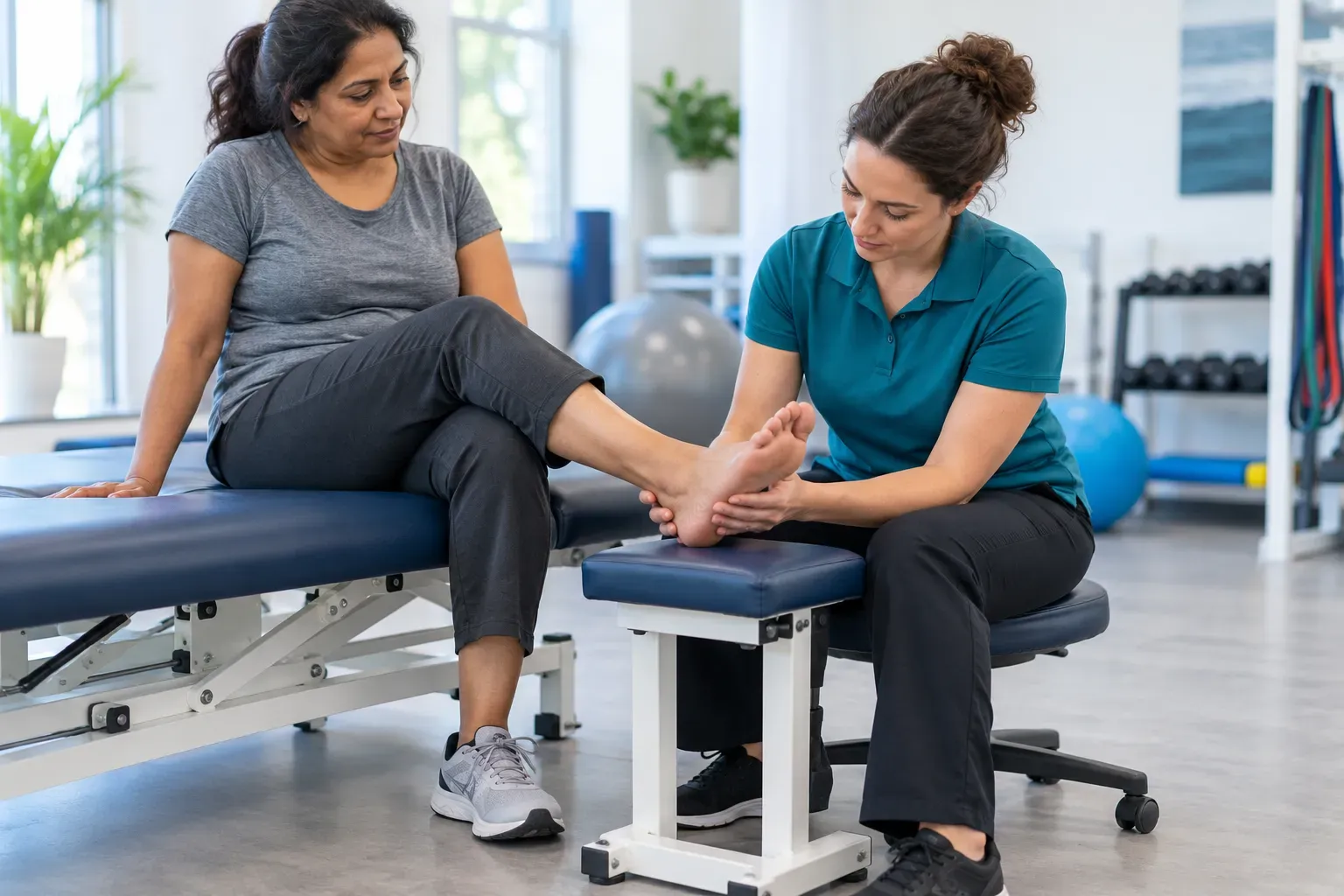
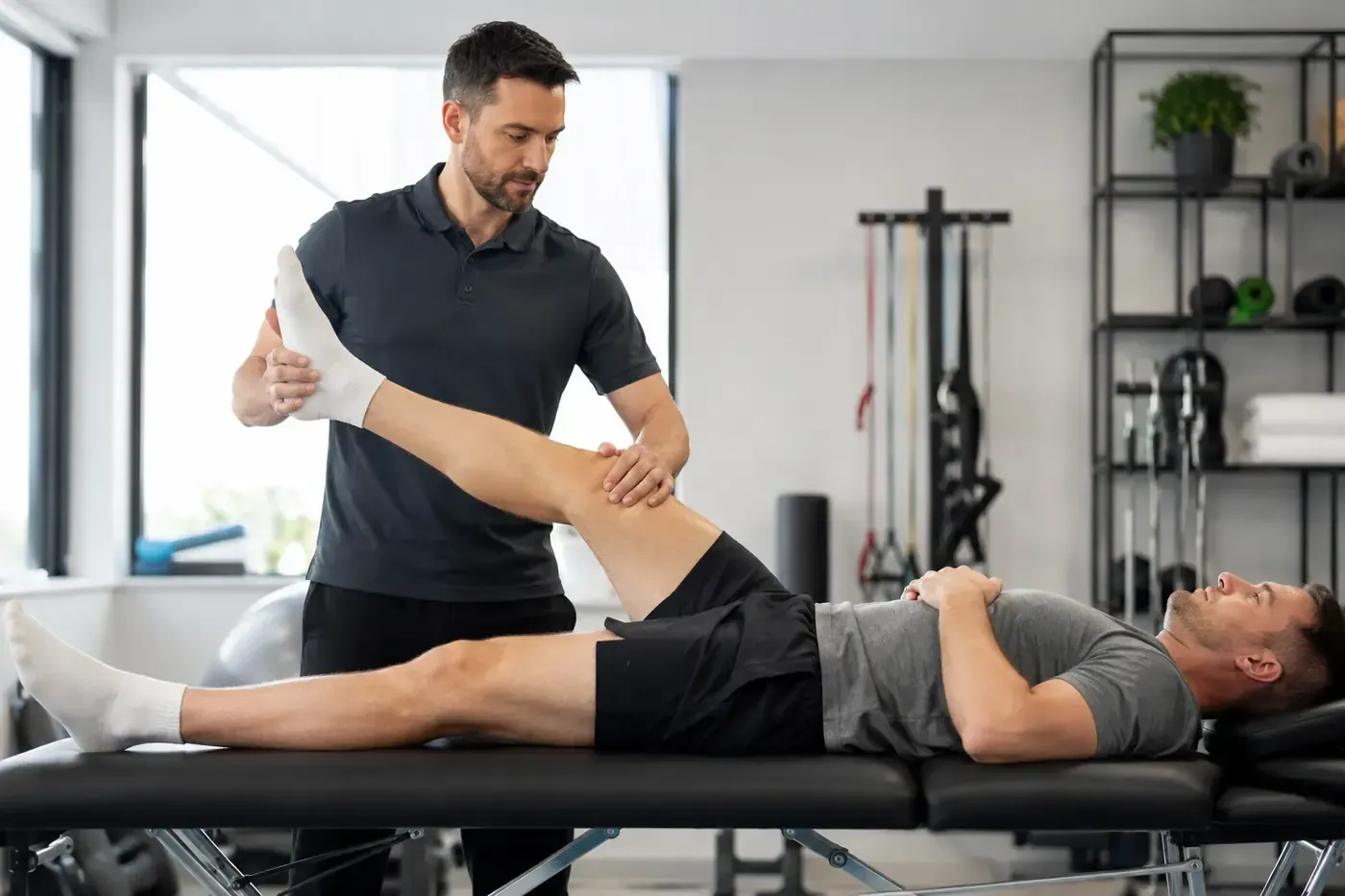
Depending on your symptoms, your physiotherapist may examine knee movement, strength, balance and the contribution of nearby joints. They may observe a supported sit-to-stand or another suitable movement rather than asking you to push through a painful activity.
The findings help guide whether physiotherapy is appropriate and whether further medical assessment is needed.
Learn more about Dynamic’s physiotherapy assessment and individualized treatment approach.
MAKING EVERYDAY MOVEMENT MORE MANAGEABLE
Until you understand what is contributing to the discomfort, avoid repeatedly forcing the movement that aggravates it.
For mild symptoms without a recent significant injury, practical adjustments may include choosing a higher, stable chair, using its armrests for support or temporarily reducing the depth and repetition of uncomfortable bending.
These adjustments can make an activity more manageable, but they do not replace assessment when pain persists, worsens or keeps returning.
Rehabilitation may include appropriately selected exercises, activity guidance and gradual progression. The aim is to build your ability to manage the movements that matter to you, with the plan adjusted according to your symptoms and response.
WHEN TO SEEK PROMPT MEDICAL ATTENTION
Seek urgent medical assessment if you cannot bear weight or move the knee, have severe pain, substantial swelling or a visible change in shape.
A hot, red knee accompanied by fever or feeling unwell also needs urgent medical attention. A knee that locks or repeatedly gives way should be assessed promptly.
For less urgent symptoms, arrange an assessment when knee pain continues to interfere with standing, walking, work or exercise.
TAKE THE NEXT STEP WITH DYNAMIC PHYSIOTHERAPY
If getting up from a chair or bending your knees is becoming a recurring concern, start by understanding the problem rather than guessing which exercise or treatment you need.
Dynamic Physiotherapy & Sports Injury Clinic provides individualized assessment and rehabilitation in Mississauga, with care guided by your symptoms, current abilities and goals.
Request a physiotherapy appointment or call 905-273-5433. Our team will contact you to confirm your appointment.
SHARE POST:
Leave a Comment:
Our Recent Post:







Contact Dynamic Physiotherapy & Sports Injury in Mississauga
For expert care and rehabilitation, contact Dynamic Physiotherapy & Sports Injury in Mississauga. Our dedicated team is ready to help you recover and achieve your health goals.