
Why Sciatica Symptoms Can Travel Down the Leg: What Physiotherapy Assessment Looks For
Learn why sciatica-related symptoms may extend from the lower back into the hip or leg and how a physiotherapy assessment can help guide rehabilitation.
Why Sciatica Symptoms Can Travel Down the Leg: What Physiotherapy Assessment Looks For
Pain that extends from the lower back or buttock into the leg can feel very different from a localized muscle strain.
Some people experience a sharp or burning sensation. Others notice tingling, numbness, aching or discomfort that changes with sitting, bending, walking or certain movements.
These symptoms are often associated with irritation or sensitivity involving the sciatic nerve or related structures. However, not every form of leg pain is sciatica, which is why understanding how the symptoms behave is an important part of treatment planning.
At Dynamic Physiotherapy & Sports Injury Clinic in Mississauga, assessment begins by looking at the pattern of symptoms, movement limitations and activities that may be contributing to the problem.
Why Sciatica Symptoms May Extend Into the Leg
The sciatic nerve is connected to nerve roots that originate in the lower spine and continue through the buttock and into the leg.
When a nerve root or surrounding structure becomes irritated or sensitive, symptoms may be experienced somewhere along that pathway. This is why discomfort associated with sciatica may be felt in the:
- Lower back
- Buttock
- Back or side of the thigh
- Calf
- Foot or toes
Symptoms do not always appear in every area. One person may primarily feel discomfort through the buttock and thigh, while another may notice tingling or altered sensation farther down the leg.
Learn more about Sciatica Treatment in Mississauga.
Leg Pain Does Not Always Begin in the Leg
When pain is felt in the thigh or calf, it is understandable to assume that the problem is located in that area.
However, some leg symptoms may be influenced by the lower back, pelvis or nerve pathway rather than by an isolated leg injury.
This distinction matters. Repeatedly treating only the location where symptoms are felt may not provide a complete approach if movement of the spine, nerve sensitivity or another contributing factor is involved.
Lower-back stiffness, changes in movement tolerance and prolonged sitting may also influence how symptoms present. For people experiencing back pain in addition to leg symptoms, our Lower Back Pain Treatment page provides additional information about Dynamic’s rehabilitation approach.
Why Symptoms Can Change From Day to Day
Sciatica-related symptoms may not remain constant.
They can become more noticeable during certain positions or activities, including:
- Prolonged sitting
- Repeated bending
- Lifting
- Driving
- Moving from sitting to standing
- Walking or standing for longer periods
- Certain exercise or work activities
Symptoms may also vary according to irritability, activity level, movement patterns and how much load the area has recently experienced.
A change in symptoms does not automatically identify the underlying cause. It does, however, provide useful information during an assessment.
What a Physiotherapy Assessment May Examine
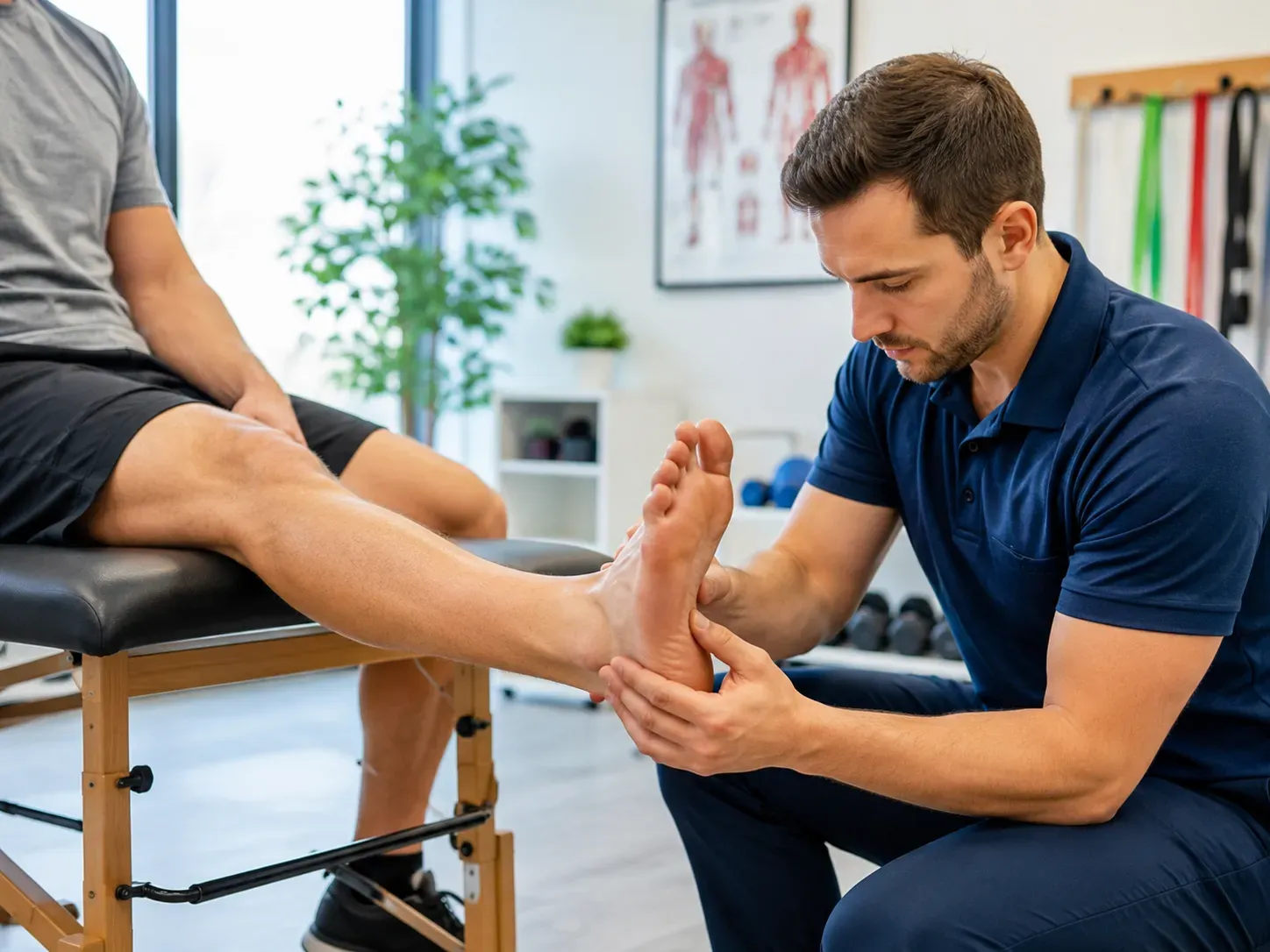
A physiotherapy assessment looks beyond the location of pain.
Depending on the individual’s presentation, the assessment may include:
- The history and behaviour of the symptoms
- Lower-back and hip movement
- Positions or activities that increase or reduce symptoms
- Strength and movement control
- Sensation or other neurological findings when appropriate
- Walking, bending and functional movement
- Work, exercise and daily activity demands
- Previous injuries and treatment history
The objective is to understand how the symptoms respond to movement and determine which rehabilitation approach is appropriate for the individual.
Because people with similar symptoms may have different contributing factors, treatment should not be based on a standard routine alone.
How Physiotherapy May Support Sciatica Rehabilitation
Once the assessment is complete, rehabilitation may focus on improving movement tolerance, reducing irritation and gradually restoring function.
A personalized plan may incorporate:
Movement and Mobility
Selected movements may help restore mobility and identify positions that are more comfortable or better tolerated.
Progressive Strengthening
Strengthening the muscles that support the spine, hips and pelvis may become part of rehabilitation as symptoms allow.
Nerve-Mobility Exercises
When appropriate, carefully selected nerve-mobility exercises may be introduced according to symptom response and treatment tolerance.
Movement and Activity Guidance
Understanding how to modify aggravating activities without unnecessarily avoiding all movement can be an important part of recovery.
Gradual Return to Function
Rehabilitation should relate to the activities the individual needs to perform, whether that involves sitting at work, walking, lifting, exercising or returning to recreation.
The appropriate combination and progression depend on the person’s symptoms, assessment findings and recovery goals.
Why Complete Rest Is Not Always the Full Answer
When leg pain becomes uncomfortable, avoiding movement can feel like the safest option.
A short reduction in aggravating activity may sometimes be appropriate, but prolonged inactivity can also affect strength, mobility and confidence in movement.
Rehabilitation aims to find a level of activity that the person can tolerate and then progress gradually. This approach is different from forcing painful movement or applying the same exercise program to everyone. The goal is to support recovery while monitoring how the symptoms respond.
When Should Sciatica-Like Symptoms Be Assessed?
A physiotherapy assessment may be appropriate when:
- Leg symptoms continue or repeatedly return
- Sitting, walking or working is becoming difficult
- Symptoms extend from the lower back or buttock into the leg
- Tingling or altered sensation accompanies the pain
- Movement has become restricted
- Rest has not produced lasting improvement
- You are uncertain which activities or exercises are appropriate
Not all leg pain is caused by sciatica. Assessment helps determine whether physiotherapy is appropriate or whether additional medical evaluation may be required.
Start With a Personalized Physiotherapy Assessment
Pain travelling into the leg can affect sitting, walking, exercise, work and everyday movement.
At Dynamic Physiotherapy & Sports Injury Clinic in Mississauga, treatment begins with an assessment of your symptoms, mobility, movement and functional limitations. Your rehabilitation plan is then developed according to your individual presentation and goals.
Book a Physiotherapy Assessment or call Dynamic Physiotherapy at 905-273-5433.
SHARE POST:
Leave a Comment:
Our Recent Post:








Contact Dynamic Physiotherapy & Sports Injury in Mississauga
For expert care and rehabilitation, contact Dynamic Physiotherapy & Sports Injury in Mississauga. Our dedicated team is ready to help you recover and achieve your health goals.