
Why Heel Pain Can Keep Returning: Understanding Plantar Fasciitis and Recovery
Why recurring heel pain happens and how physiotherapy, Shockwave Therapy and progressive rehabilitation may support recovery.
Why Heel Pain Can Keep Returning: Understanding Plantar Fasciitis and Recovery
Heel pain can be frustrating, especially when it seems to improve for a while and then returns as soon as you increase your walking, exercise or time on your feet.
One of the most common causes of recurring heel discomfort is plantar fasciitis, a condition involving irritation of the plantar fascia — the strong band of tissue that runs along the bottom of the foot.
For some people, symptoms begin after a sudden increase in activity. For others, heel pain develops gradually and becomes more noticeable during the first few steps in the morning, after sitting for a long period, or following prolonged standing and walking.
At Dynamic Physiotherapy & Sports Injury Clinic, treatment for plantar fasciitis in Mississauga begins by looking at the factors that may be contributing to the problem rather than focusing only on the painful area.
Why Does Plantar Fasciitis Keep Coming Back?
Plantar fasciitis does not always have one single cause.
The plantar fascia is exposed to repeated load every time you stand, walk or run. When the amount of stress placed on the tissue exceeds what it can comfortably tolerate, irritation may develop.
Factors that may contribute include:
- A sudden increase in walking, running or exercise
- Prolonged standing at work
- Tightness through the calf or ankle
- Changes in footwear
- Foot mechanics and walking patterns
- Reduced strength or mobility
- Repetitive strain
- Returning to activity too quickly after symptoms begin
Rest may temporarily reduce symptoms, but if the underlying loading or movement factors have not changed, heel pain may return when normal activity resumes.
Why Assessment Matters
Two people with heel pain may require very different treatment plans.
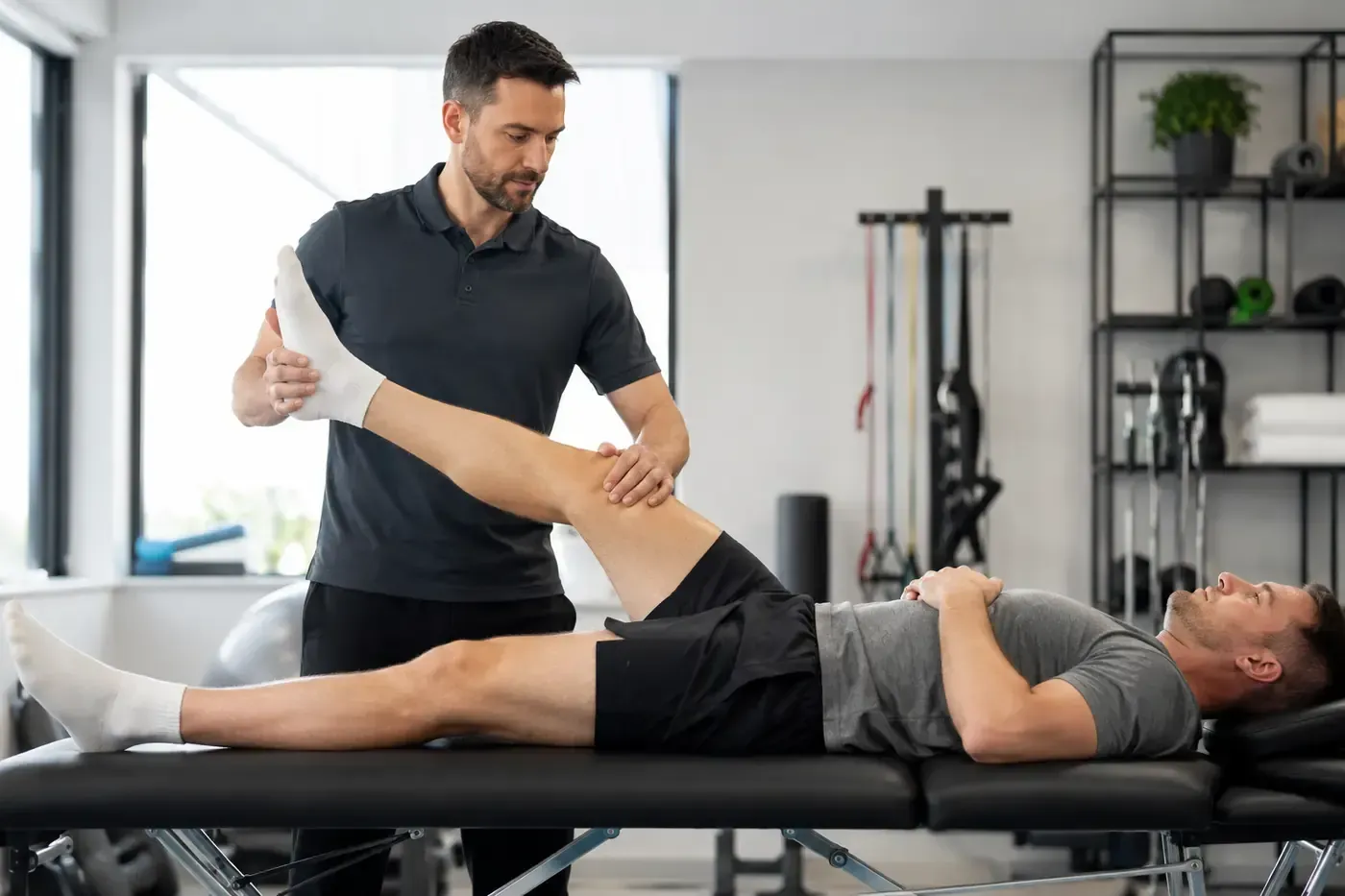
A physiotherapy assessment can look at your symptoms, activity history, ankle and foot mobility, strength, walking pattern and functional limitations.
The goal is to determine what may be placing excessive stress on the plantar fascia and which areas should be addressed as part of rehabilitation.
Our physiotherapy services in Mississauga use individualized assessment and treatment rather than applying the same approach to every person with heel pain.
Treatment Is Often More Than Stretching
Stretching is frequently recommended for plantar fasciitis, particularly when calf or ankle tightness is present, but rehabilitation may involve several components.
Depending on the assessment, treatment may include:
- Education about activity and symptom management
- Calf and plantar fascia mobility exercises
- Foot and ankle strengthening
- Progressive loading exercises
- Manual therapy when appropriate
- Gradual return to walking, work or recreational activity
- Footwear recommendations
- Review of walking and lower-limb mechanics
The appropriate combination will depend on the individual, how long symptoms have been present and how the foot responds to treatment.
When Shockwave Therapy May Be Considered
For some persistent cases of plantar fasciitis, Shockwave Therapy in Mississauga may be considered as part of a broader rehabilitation plan.
Shockwave Therapy uses externally applied acoustic energy and may be appropriate for selected persistent tendon and soft-tissue conditions.
It is not necessary or appropriate for every person with heel pain. Before recommending Shockwave Therapy, the practitioner should review the nature and duration of the symptoms, medical history, previous treatment and overall rehabilitation needs.
Exercise, mobility work and activity progression may still remain important parts of the treatment plan.
Do Custom Orthotics Help Plantar Fasciitis?
Foot support can also be considered when assessment findings suggest that footwear, pressure distribution or foot mechanics may be contributing to symptoms.
Custom foot orthotics are created according to an individual assessment rather than selected as a one-size-fits-all solution.
Some people with plantar fasciitis may benefit from additional support, while others may respond well to footwear changes, exercise and physiotherapy without requiring custom orthotics.
The decision should be based on the individual rather than simply on the diagnosis.
Gradual Progress Is Important
One of the most common mistakes with recurring heel pain is doing too much as soon as the foot begins to feel better.
A reduction in pain does not always mean the tissue is immediately ready for the same amount of walking, running or prolonged standing that originally aggravated it.
A gradual increase in activity gives the foot time to adapt while strength, mobility and tolerance improve.
Recovery time varies depending on how long the problem has been present, daily activity demands, contributing factors and individual response to rehabilitation.
Start by Understanding Why Your Heel Hurts
If heel pain is affecting your walking, work, exercise or everyday activities, it may be helpful to determine why the symptoms continue to return.
At Dynamic Physiotherapy & Sports Injury Clinic in Mississauga, plantar fasciitis treatment is based on an individual assessment and may include physiotherapy, exercise, manual treatment, Shockwave Therapy, footwear guidance or custom orthotics when appropriate.
Contact Dynamic Physiotherapy to book an assessment and determine an appropriate treatment plan for your heel pain.
SHARE POST:
Leave a Comment:
Our Recent Post:








Contact Dynamic Physiotherapy & Sports Injury in Mississauga
For expert care and rehabilitation, contact Dynamic Physiotherapy & Sports Injury in Mississauga. Our dedicated team is ready to help you recover and achieve your health goals.