
Why Knee Pain Can Make Stairs Difficult: What Physiotherapy Assessment Looks For
Learn why knee pain can feel worse on stairs and how physiotherapy assessment can identify strength, mobility and movement factors affecting the knee.
Knee pain can make ordinary activities surprisingly difficult. Walking on level ground may feel manageable, yet climbing or descending stairs can cause discomfort, weakness or a feeling that the knee is not moving confidently.
Some people feel pain at the front of the knee or around the kneecap. Others notice discomfort along the inside or outside of the joint. The knee may feel stiff, unstable or unable to tolerate the load required when stepping up or lowering the body down.
Because stair-related knee pain can have several contributing factors, treatment should begin with understanding how the knee—and the rest of the lower body—is functioning.
At Dynamic Physiotherapy & Sports Injury Clinic in Mississauga, physiotherapy assessment considers strength, mobility, balance, movement control and the activities that aggravate symptoms before an individualized rehabilitation plan is recommended.
Learn more about our knee pain assessment and physiotherapy in Mississauga.
Why Do Stairs Place More Demand on the Knee?
Using stairs requires more strength and control than walking across a flat surface.
When climbing, the muscles around the hip, thigh, knee and ankle work together to lift the body onto the next step. When descending, these muscles must control the body as it lowers against gravity.
This creates greater demand on the knee joint and surrounding tissues.
Stair discomfort may become more noticeable when:
- The quadriceps are weak or not activating effectively
- Hip strength or movement control is reduced
- Ankle mobility is limited
- The kneecap is not moving efficiently
- The knee is irritated or swollen
- Balance has changed
- The leg is unable to absorb or control load
- Activity has increased too quickly
- A previous injury has affected movement patterns
The location of the pain is important, but it is only one part of understanding the problem.
Why Can Knee Pain Feel Worse When Going Downstairs?
Many people find that descending stairs is more uncomfortable than climbing them.
When stepping down, the muscles at the front of the thigh must gradually control the bending of the knee while supporting much of the body’s weight. This is sometimes called eccentric muscle control.
If strength, coordination or confidence has declined, the knee may be exposed to more strain during this lowering movement.
A person may compensate by:
- Turning the foot outward
- Allowing the knee to move inward
- Dropping the opposite side of the pelvis
- Holding tightly onto the railing
- Lowering the body quickly rather than with control
- Avoiding weight on the painful leg
- Moving sideways down the stairs
These adjustments may temporarily reduce discomfort, but they can also indicate that the body is compensating for weakness, stiffness, pain or reduced movement control.
What May Contribute to Knee Pain on Stairs?
Knee pain is not one single condition. Several problems can produce discomfort during stair use.
Patellofemoral Pain
Patellofemoral pain is commonly felt around or behind the kneecap. It may become noticeable during stairs, squatting, kneeling, running or prolonged sitting.
Muscle strength, lower-limb alignment, activity levels and movement mechanics may all influence how the kneecap and surrounding structures tolerate load.
Tendon Irritation
The quadriceps and patellar tendons help transfer force between the thigh muscles, kneecap and lower leg.
Learn more about patellofemoral pain assessment and physiotherapy.
A sudden increase in running, jumping, stairs or exercise may irritate these tissues, particularly when the body has not had enough time to adapt.
Osteoarthritis and Joint Stiffness
Changes within the knee joint may contribute to stiffness, reduced mobility, discomfort or difficulty accepting weight through the affected leg.
Symptoms do not always correspond directly with imaging findings. Strength, mobility, activity tolerance and overall function remain important parts of the assessment.
Meniscal or Joint Irritation
The menisci help distribute load within the knee. Irritation may cause localized discomfort, swelling, catching or difficulty with bending and twisting movements.
Not every episode of knee pain means that a structure is seriously damaged. A clinical assessment helps determine whether rehabilitation is appropriate or whether additional medical investigation may be required.
Previous Injury
A previous ankle, knee, hip or lower-back injury may continue to influence how someone walks, balances and manages stairs.
Even after pain improves, differences in strength or movement control may remain and place greater demand on another area.
The Hip and Ankle Can Affect the Knee
Although the symptoms are felt at the knee, the assessment should not necessarily stop there.
The hip helps control the position of the thigh and knee during walking, squatting and stair use. Reduced hip strength may allow the knee to move inward or make it more difficult to control the pelvis while standing on one leg.
The ankle must also move sufficiently as the body travels over the foot. Limited ankle mobility can cause compensations at the knee, hip or trunk.
This is why a physiotherapist may examine the entire lower limb rather than focusing only on the painful location. Read Why Hip Mobility Matters for the Knee, Lower Back and Everyday Movement
What Does a Physiotherapy Assessment Look For?
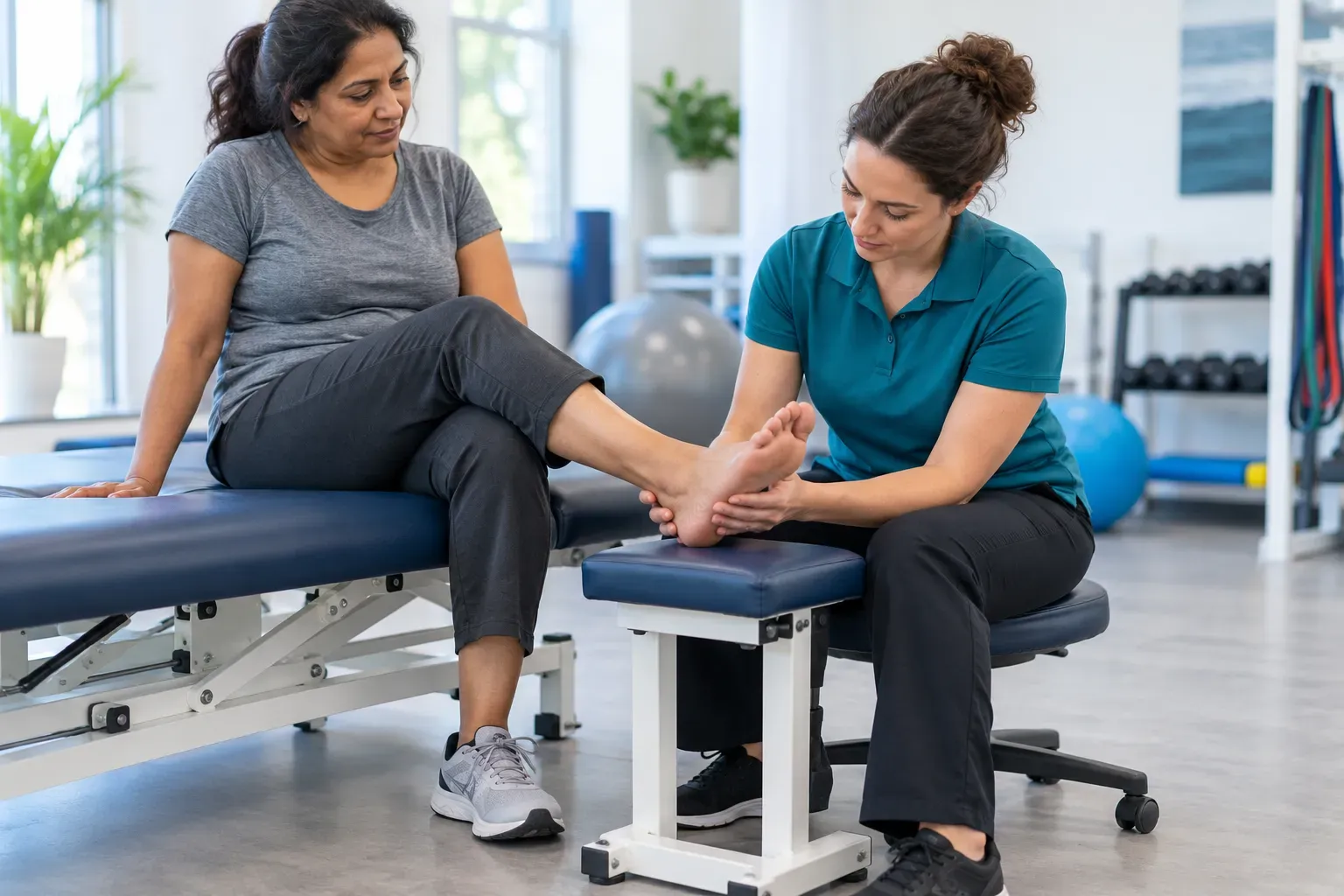
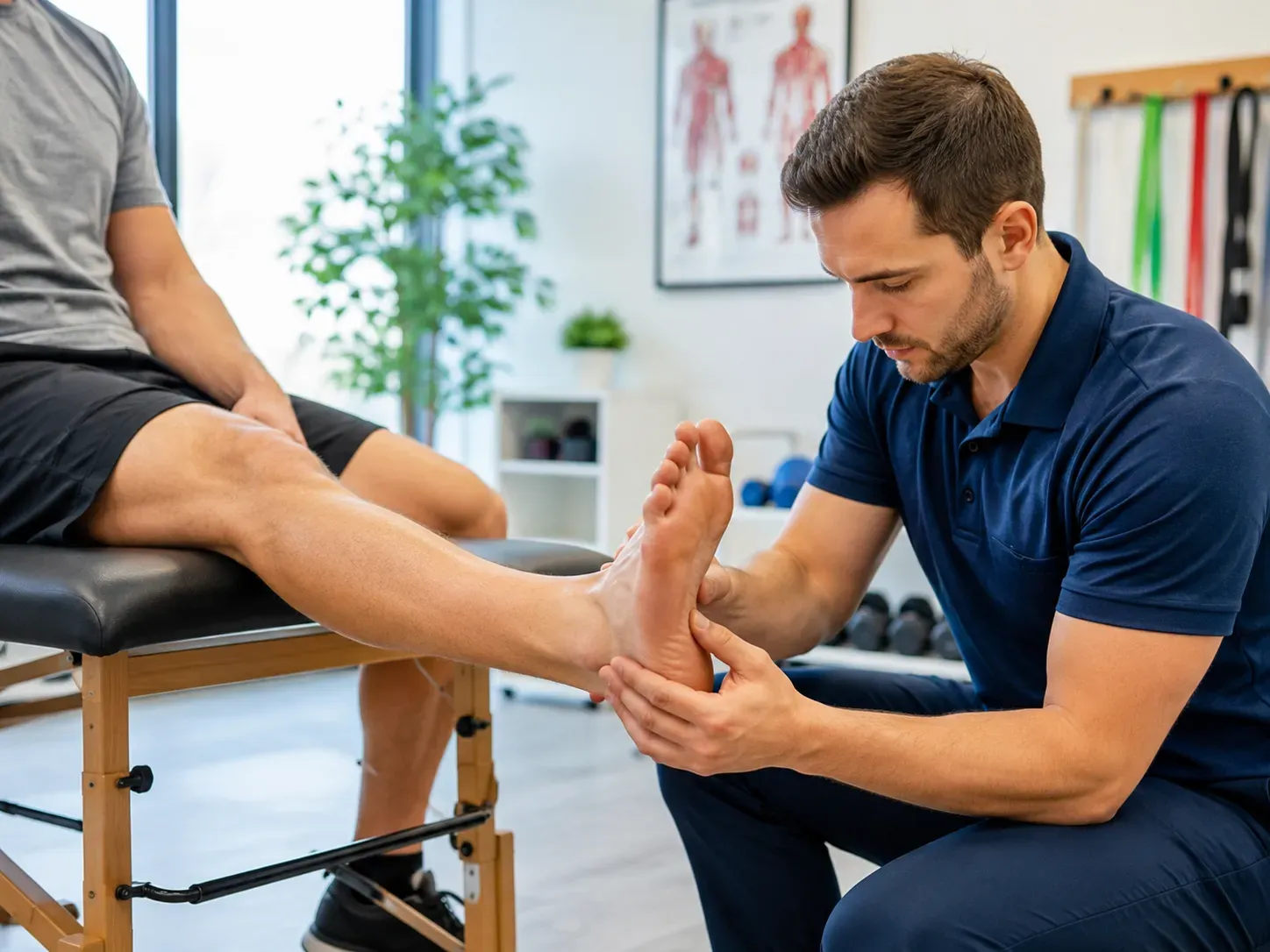
A physiotherapy assessment begins by discussing how the symptoms started and which activities are difficult.
The physiotherapist may ask about:
- The location and nature of the pain
- Whether symptoms began suddenly or gradually
- Recent changes in exercise, work or daily activity
- Swelling, clicking, locking or instability
- Previous injuries
- How stairs, walking, sitting or squatting affect symptoms
- Current exercise habits
- The client’s goals and usual activities
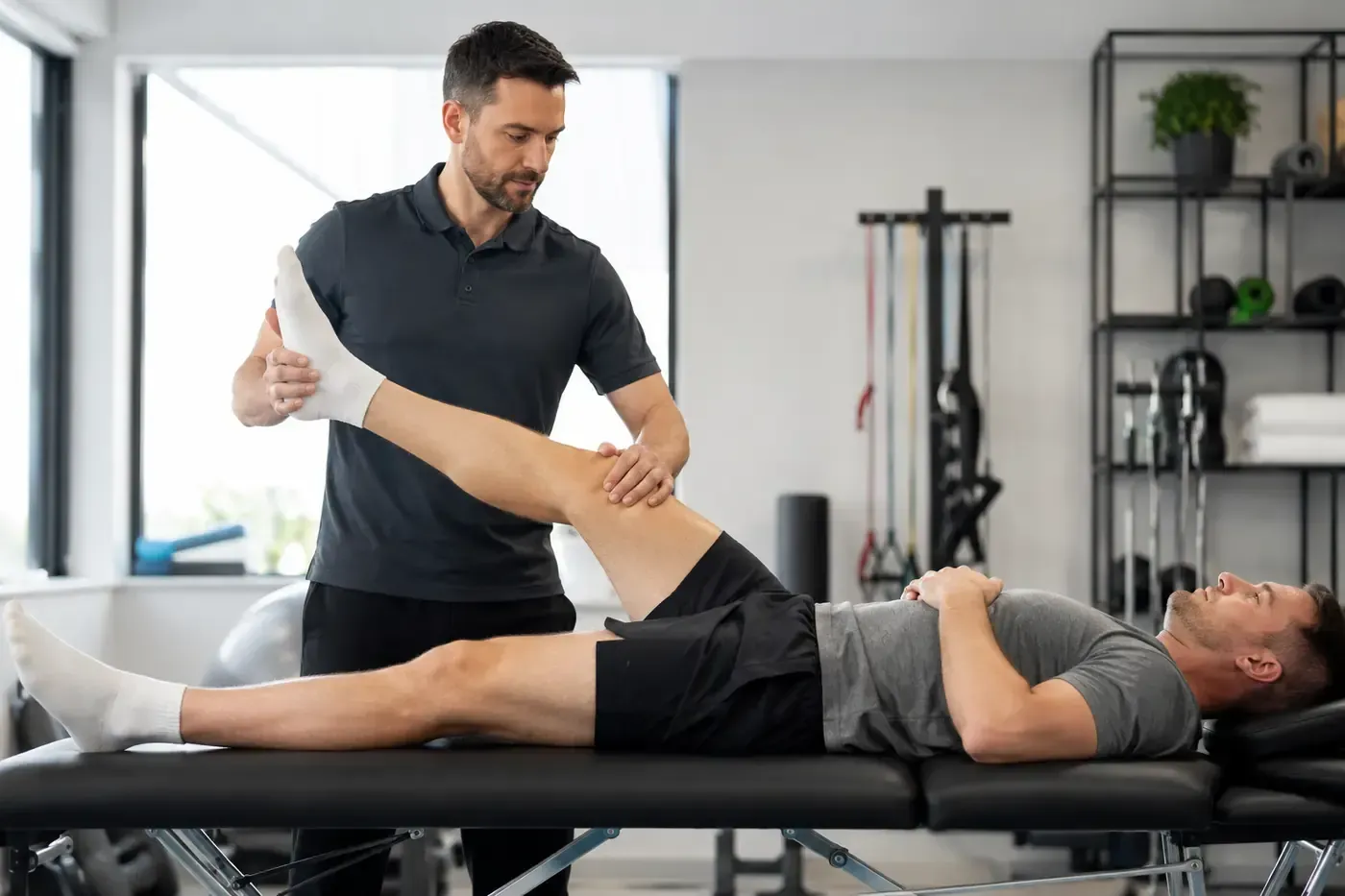
The physical assessment may then examine:
- Knee bending and straightening
- Hip and ankle mobility
- Quadriceps and hip strength
- Balance and single-leg control
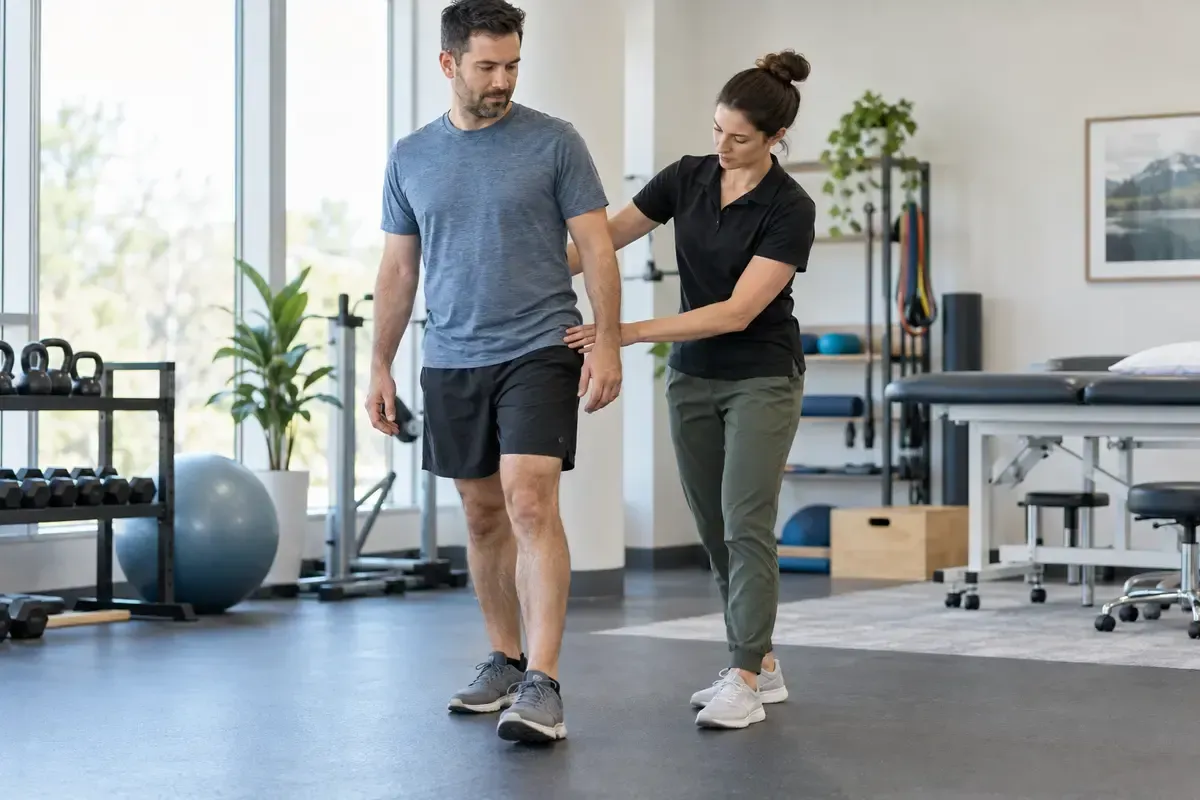
- Walking mechanics
- Squatting or step-down movement
- The position of the foot, knee, hip and trunk
- Tenderness or swelling
- The knee’s tolerance for gradually applied load
The purpose is not simply to identify where it hurts. It is to understand what may be affecting function and which factors can be addressed through rehabilitation.
Learn More About Physiotherapy at Dynamic
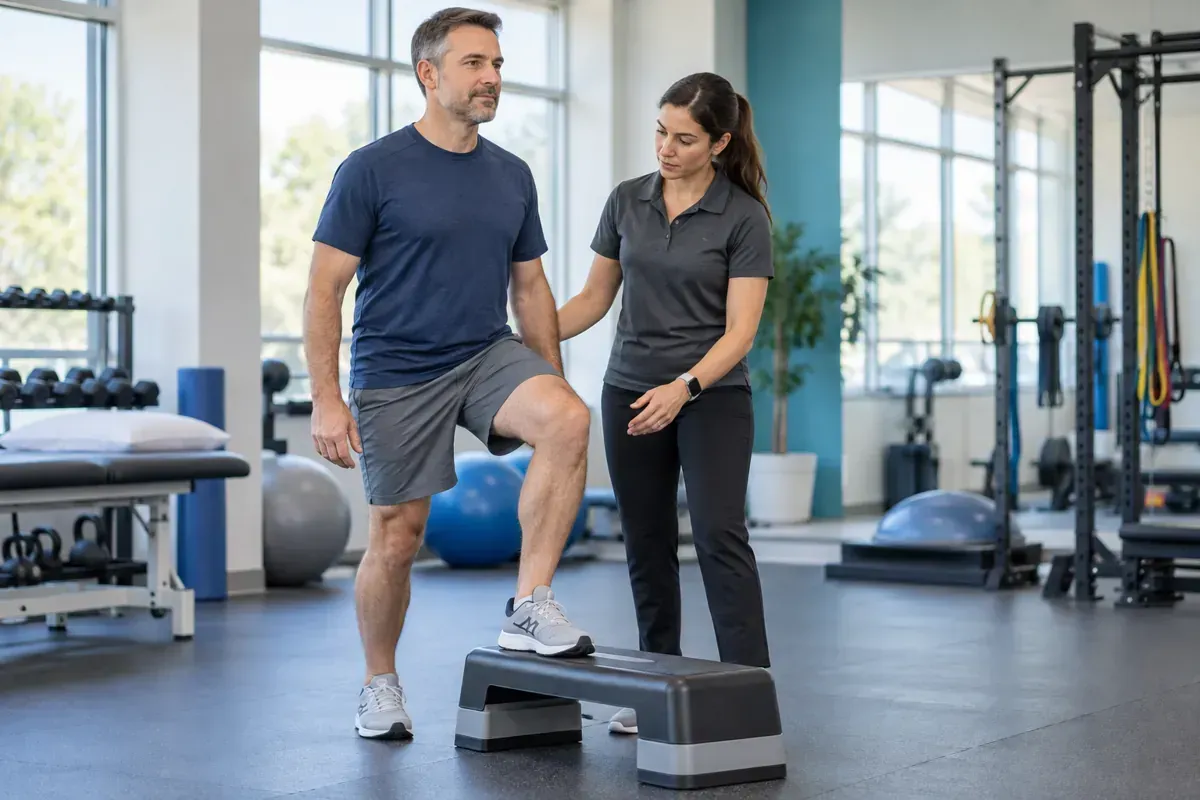
Why Can a Step-Down Assessment Be Helpful?
A controlled step-down movement can provide useful information about how the lower body manages load.
During the movement, a physiotherapist may observe:
- Whether the knee remains aligned over the foot
- How well the hip and pelvis are controlled
- Whether the person shifts weight away from the painful side
- The amount of ankle movement available
- Whether the movement is smooth or hesitant
- When pain appears during the task
- Whether changing the technique affects symptoms
This does not mean there is one perfect way to move. People have different body structures, mobility and movement habits.
The goal is to identify potentially modifiable factors that may be contributing to discomfort or reduced confidence.
How May Physiotherapy Help?
Treatment depends on the assessment findings and the individual’s goals.
A rehabilitation plan may include one or more of the following approaches.
Education and Activity Modification
It may be helpful to temporarily adjust activities that repeatedly aggravate the knee while maintaining an appropriate level of movement.
Complete rest is not always necessary. The objective is generally to find a manageable level of activity that allows the knee to settle while its capacity is gradually rebuilt.
Strengthening Exercises
Exercises may focus on the quadriceps, gluteal muscles, hamstrings, calves and other muscles that support the lower limb.
Strengthening should be progressed according to the knee’s response rather than using the same program for every person.
Mobility Exercises
When limited hip, knee or ankle mobility is contributing to altered movement, targeted mobility exercises may be incorporated into the rehabilitation plan.
Balance and Movement Control
Balance exercises and controlled functional movements may help improve confidence and coordination during activities such as stairs, walking and changing direction.
Read Why Balance Training Matters During Recovery
Manual Therapy
Depending on the assessment findings, hands-on techniques may be used to address mobility restrictions or reduce symptoms sufficiently to support active rehabilitation.
Manual therapy is generally most useful when combined with exercise, education and a plan for restoring function.
Gradual Return to Activity
A rehabilitation program may progress from basic strength and control exercises to step-ups, step-downs, squats, walking, running or sport-specific activities.
The progression should reflect the demands the person needs to manage in everyday life.
Should You Avoid Stairs When Your Knee Hurts?
Whether stairs should be temporarily limited depends on the severity and behaviour of the symptoms.
If repeated stair use causes a significant increase in pain or swelling, reducing unnecessary trips may help while the knee is being assessed. However, avoiding stairs indefinitely may allow strength and confidence to decline further.
A more useful approach may involve adjusting:
- The number of repetitions
- The height of the step
- The speed of the movement
- The use of a railing
- The amount of weight placed through the painful leg
- The frequency of stair-based exercise
The goal is to manage symptoms while gradually improving the knee’s ability to tolerate the activity.
Knee Pain May Be Connected to Other Areas
Movement through the lower body is interconnected.
Restricted hip mobility, reduced ankle movement or irritation arising from the lower back can sometimes alter how the knee is loaded.
Symptoms that appear to be isolated to the knee should therefore be considered alongside the movement and function of the surrounding regions.
If symptoms also travel from the lower back or buttock into the leg, a broader assessment may be needed to determine whether the lumbar spine or sciatic nerve is contributing.
Learn About Sciatica Assessment and Rehabilitation
Learn About Lower-Back Pain Physiotherapy
When Should Knee Pain Be Assessed?
Consider seeking an assessment when knee pain:
- Continues or repeatedly returns
- Interferes with stairs, walking or exercise
- Causes the knee to give way
- Is associated with persistent swelling
- Limits the ability to bend or straighten the knee
- Began after a fall, twist or direct impact
- Prevents a return to work, recreation or sport
Urgent medical attention may be appropriate following significant trauma, an inability to bear weight, marked swelling, obvious deformity, fever, redness or other concerning symptoms.
Recovery Should Be Based on Function
The aim of rehabilitation is not only to reduce discomfort while resting.
A successful plan should help the individual regain the strength, mobility and confidence needed for daily activities.
For someone experiencing stair-related knee pain, progress may be measured by the ability to:
- Step up with improved control
- Descend without avoiding the affected leg
- Walk longer distances
- Rise from a chair more comfortably
- Squat or kneel when required
- Return to work, recreation or exercise
Recovery time varies according to the cause of the symptoms, how long they have been present, the individual’s general health and the physical demands of their activities.
Begin With a Physiotherapy Assessment
If knee pain is making stairs, walking, squatting or exercise difficult, an assessment can help identify the factors contributing to the problem.
At Dynamic Physiotherapy & Sports Injury Clinic in Mississauga, we develop individualized rehabilitation plans based on each client’s symptoms, movement, activity requirements and recovery goals.
We serve clients from Mississauga and surrounding communities who want to move more comfortably and return to everyday activity with greater confidence.
Book a Physiotherapy Assessment
Contact Dynamic Physiotherapy & Sports Injury Clinic
SHARE POST:
Leave a Comment:
Our Recent Post:




Contact Dynamic Physiotherapy & Sports Injury in Mississauga
For expert care and rehabilitation, contact Dynamic Physiotherapy & Sports Injury in Mississauga. Our dedicated team is ready to help you recover and achieve your health goals.