
Why Neck and Shoulder Pain Keep Coming Back With Desk Work
Learn why desk work, posture, muscle tension, and reduced mobility can contribute to recurring neck and shoulder pain — and how physiotherapy can help.
Why Neck and Shoulder Pain Keep Coming Back With Desk Work
Neck pain and shoulder pain are common concerns for people who spend long hours sitting, working at a computer, driving, looking down at a phone, or repeating the same movements throughout the day.
For many people, the pain improves for a short time and then keeps coming back. This can be frustrating, especially when stretching, resting, massage, or changing positions only provides temporary relief.
At Dynamic Physiotherapy & Sports Injury Clinic in Mississauga, we often see patients with recurring neck and shoulder pain connected to posture, muscle tension, reduced mobility, weakness, repetitive strain, previous injuries, or movement habits that place extra stress on the upper body.
Why Desk Work Can Contribute to Neck and Shoulder Pain
Desk work does not always cause pain by itself. The problem often develops when the body stays in one position for long periods without enough movement, strength, or support.
Common contributing factors may include:
- forward head posture
- rounded shoulders
- tight neck and chest muscles
- weak upper back and shoulder stabilizers
- reduced shoulder mobility
- repetitive keyboard or mouse use
- poor workstation setup
- long periods without movement breaks
- stress-related muscle tension
Over time, these factors can increase strain on the neck, shoulders, upper back, and surrounding soft tissues.
Why the Pain Keeps Coming Back
Neck and shoulder pain may return when the underlying cause has not been properly addressed.
Temporary relief may help symptoms feel better for a short period, but recurring pain often needs a more complete approach. If the muscles remain weak, the joints stay stiff, movement patterns are not corrected, or daily habits continue to overload the area, the discomfort can return.
This is why a proper physiotherapy assessment is important.
A personalized physiotherapy assessment can help identify what may be contributing to your symptoms and what needs to improve for better long-term recovery.
Neck Pain and Shoulder Pain Are Often Connected
The neck and shoulder do not work separately. Pain in one area can affect the other.
For example, limited neck mobility may change how the shoulder moves. Shoulder weakness or poor shoulder blade control may place extra stress on the neck. Upper back stiffness can also affect both areas.
This is why treatment often needs to consider the full upper body, not just the exact spot where pain is felt.
How Physiotherapy Can Help
Physiotherapy may help by addressing the movement, strength, mobility, and function behind the symptoms.
Depending on your assessment, your treatment plan may include:
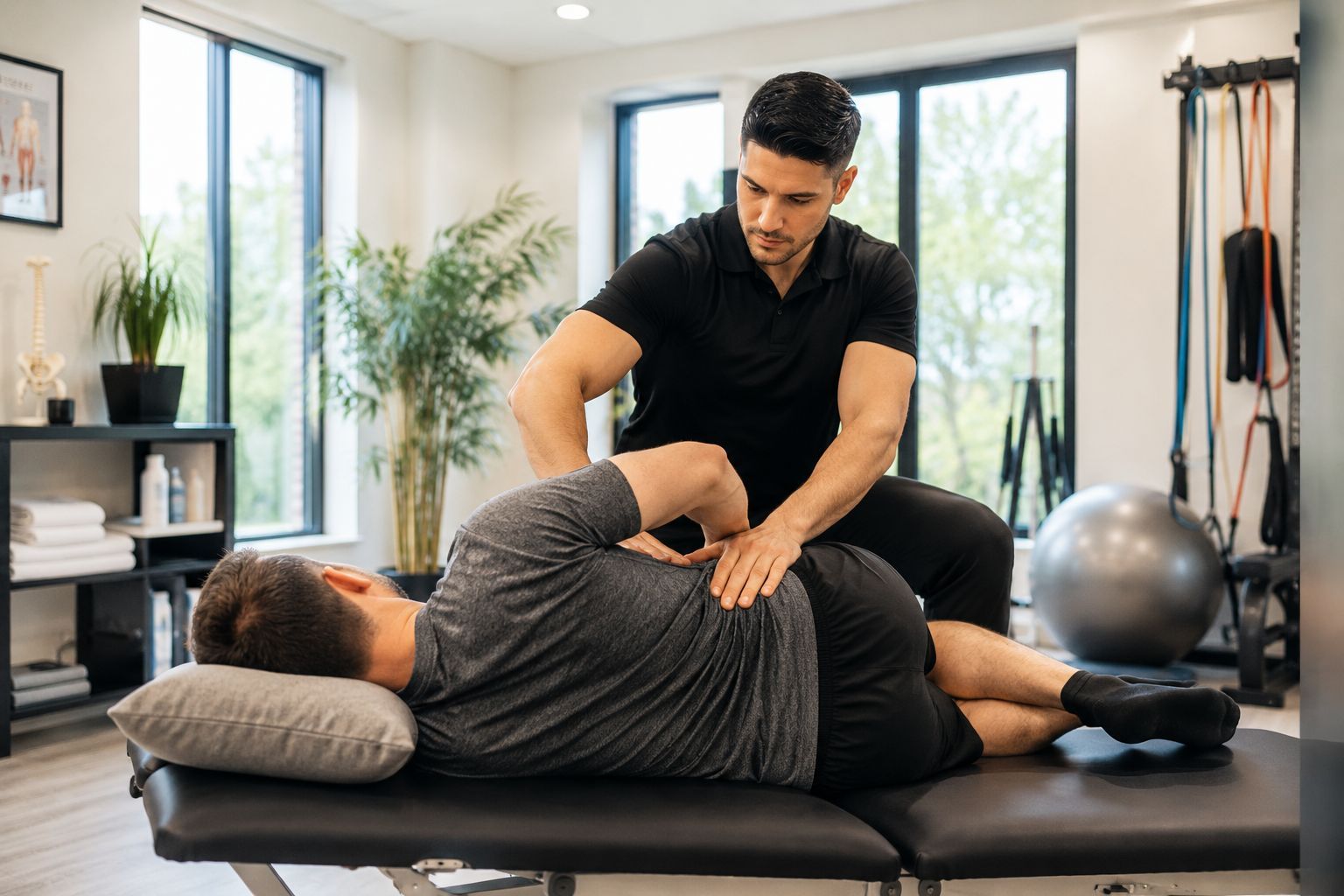
- hands-on physiotherapy
- soft tissue therapy
- joint mobility work
- posture and movement correction
- shoulder mobility exercises
- neck and upper back strengthening
- stretching and flexibility work
- education for desk setup and activity habits
- guided rehabilitation exercises
The goal is not only to reduce pain temporarily, but to help improve how the neck, shoulders, and upper back move and function together.
When to Book a Physiotherapy Assessment
You should consider booking an assessment if you experience:
- neck pain that keeps returning
- shoulder pain with sitting or desk work
- stiffness when turning your head
- pain between the shoulder blades
- headaches connected to neck tension
- shoulder tightness or weakness
- pain with lifting, reaching, or computer work
- symptoms that improve temporarily but return
Early assessment can help prevent the issue from becoming more persistent.
Physiotherapy in Mississauga for Neck and Shoulder Pain
At Dynamic Physiotherapy & Sports Injury Clinic in Mississauga, we create personalized treatment plans based on your symptoms, movement, strength, mobility, work habits, and recovery goals.
Whether your pain is related to desk work, posture, repetitive strain, injury, or reduced mobility, physiotherapy can help guide your recovery with a structured plan.
If neck or shoulder pain keeps coming back, book a physiotherapy assessment and take the next step toward better movement, strength, and long-term recovery.
SHARE POST:
Leave a Comment:
Our Recent Post:








Contact Dynamic Physiotherapy & Sports Injury in Mississauga
For expert care and rehabilitation, contact Dynamic Physiotherapy & Sports Injury in Mississauga. Our dedicated team is ready to help you recover and achieve your health goals.